
February is when many North Texas property owners start planning ahead. Budgets are set, projects are scheduled, and the question becomes practical: what will endure the heat, wind, clay soil, and sudden cold snaps? In cities like Dallas, Frisco, Prosper, and nearby suburbs, the climate shapes every smart decision, from grading and drainage to plant selection and hardscape materials.
At Complete Landscculpture, we approach planning with proven methods developed through years of hands-on work in North Texas. Our focus is on clear communication, a dependable landscape design process, and real-world performance. The goal is a landscape that looks right for your property today and continues to perform season after season.
What makes North Texas environmental conditions so demanding?
North Texas weather changes quickly, putting stress on the ground plane, plant material, and built features. Long stretches of high heat and sun exposure challenge water use and color schemes. Heavy rain events test soil conditions, slopes, and drainage paths. Sudden winter weather can catch tender growth off guard.
These patterns influence landscape architecture choices at every scale. In a front yard, the viewing perspective from the street matters, but so does how water moves toward sidewalks and foundations. On commercial sites, spatial organization across parking lots, walkways, and entrances must handle runoff and foot traffic without creating erosion or muddy zones. A climate-smart plan unifies the garden, structures, and maintenance realities into one cohesive design.
Start with a site inventory that respects property boundaries and drainage
A strong plan begins with a thorough site inventory. Our team evaluates property boundaries, grading, sun and shade, wind exposure, and existing tree forms. We also consider the house’s shape, utility locations, and the spaces you want to use most. These details guide practical decisions early, before committing to a final design.
Drainage planning is where good design and long-term performance meet. Clay-heavy soil can hold water, then crack when dry, so we pay close attention to runoff routes and planting beds that need improved structure. This step also influences hardscape elements, as patios, walkways, and steps require stable bases and proper pitch. When the foundation work is right, outdoor rooms feel solid and comfortable instead of requiring constant repairs.
Plant selection that handles heat, wind, and seasonal swings
Plant selection in North Texas succeeds when it matches the site, not a catalog photo. We think in terms of function, exposure, and how plants will mature. The most enduring plants tolerate local stress while delivering reliable color and form. That’s why we consider mature size, root zone space, and how plants fit within nearby beds and walkways.
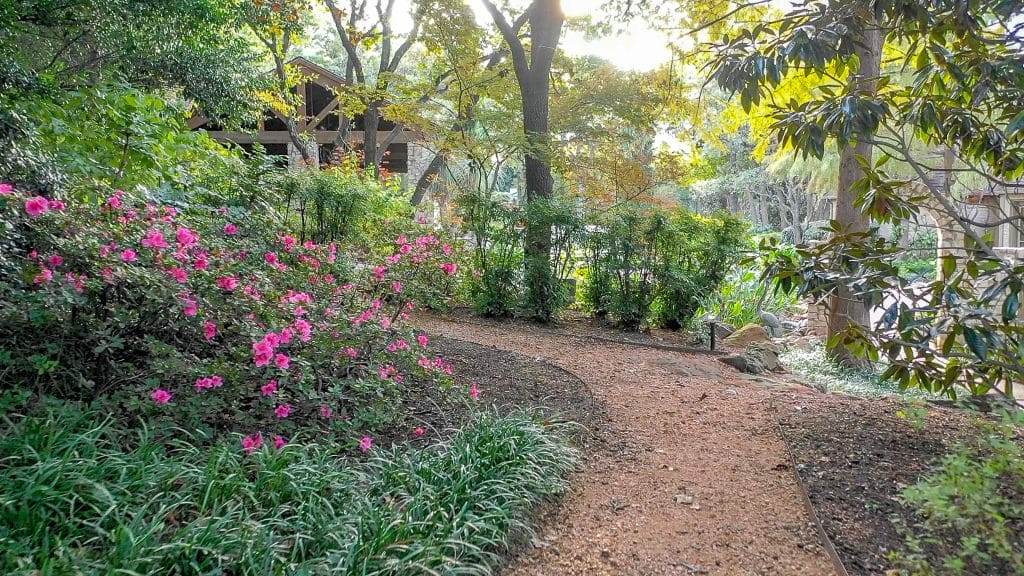
Texture and massing are as important as blooms. Fine textures soften edges and reduce visual weight near entry walks, while coarse textures and large leaves anchor beds and create contrast. Ornamental grasses add movement and seasonal interest, while small trees provide shade and scale without overwhelming tight spaces. We also plan plant groupings so the landscape looks intentional year-round, even when flowers aren’t the focus.
Color theory that stays attractive under intense sun
North Texas light can be bright and unforgiving, so we use color theory carefully. Warm and bright colors can feel vibrant near an entry but may seem intense in full afternoon sun if overused. Cool colors create a calmer feel, especially in shaded areas or private outdoor spaces where comfort matters.
Color schemes interact with green foliage, bark, and stone. Bold colors work best when used with restraint and supported by consistent planting structure. Gradual transitions and planned changes help beds feel polished rather than busy. By balancing color with texture and form, visual interest remains strong without overwhelming the architecture.
Principles of landscape design that help properties feel organized
Strong landscapes look effortless because the principles of landscape design work quietly in the background. We use balance, proportion, and rhythm to create cohesive spaces from the driveway to the back patio. Symmetry supports formal designs, while asymmetrical balance feels more natural and inviting when the home’s layout calls for it.
We also plan for negative space, giving the eye a place to rest and preventing overcrowding. Clear edges and intentional lines matter here. A straight-line walk complements modern architecture, while organic lines suit softer garden designs with curved beds and layered planting. Consistent use of elements creates a unified look that remains readable from multiple angles.
Focal point planning that fits residential and commercial needs
A focal point gives the landscape a clear “arrival” moment. In a front yard, it might be an entry grouping, a specimen tree, or a bed composition that frames the door and complements the house. On commercial sites, focal points often reinforce branding and wayfinding, prioritizing visibility and durability near traffic.
Focal points work best when visual weight is managed. We consider viewing perspectives from cars, sidewalks, and windows, placing stronger shapes, bolder plants, or hardscape features where they’ll be most appreciated. Garden ornaments can play a role but should match design themes and maintenance expectations to remain intentional year-round.
Hardscape materials chosen for performance and consistency
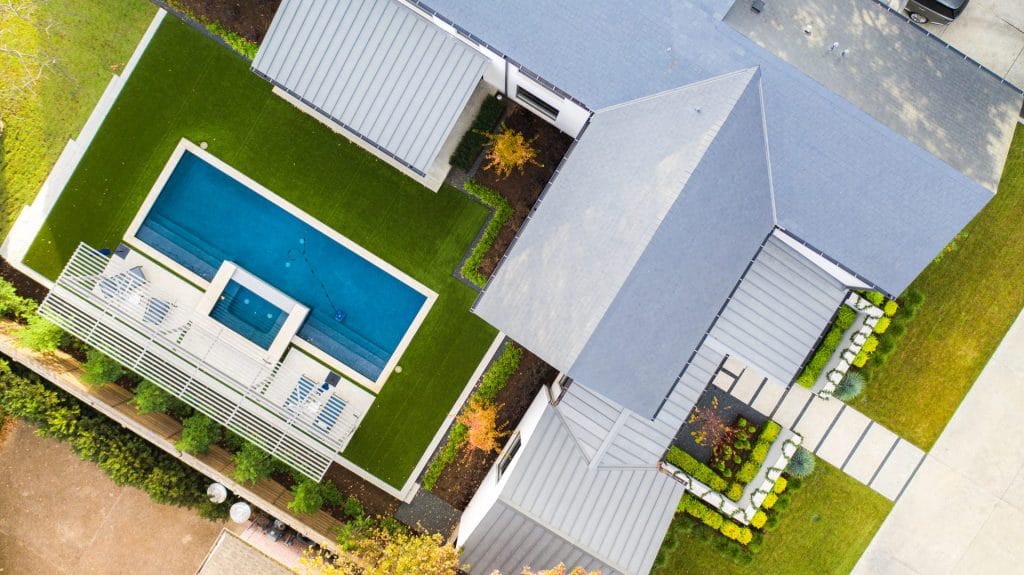
Hardscape materials in North Texas must handle heat, shifting soils, and sudden wet weather. Patios, pool decks, retaining features, and walkways rely on base preparation and material selection suited to the site. The goal is durability and safety, along with an appearance that complements the home or building’s architectural style.
Hardscape features also define outdoor rooms. A seat wall can shape a gathering space, while steps and landings guide movement through the garden. Coordinating hardscape elements with plant groupings and lighting creates a complete, cohesive design. A full-service team ensures design and build decisions stay aligned from concept to installation.
How do design principles guide a climate-smart design process?
Climate-smart planning uses design principles to keep decisions consistent from the first site visit through the final design. Our process connects soil conditions, water movement, and sun exposure to garden design principles, ensuring each plant and hardscape choice supports function, comfort, and long-term stability. This structure helps clients feel confident through every phase.
Residential Design & Build considerations for North Texas living
Residential projects often focus on livability. We design outdoor spaces that support how you use your property, whether that means a shaded sitting area, clear paths for kids and pets, or a backyard arranged into outdoor rooms for dining and relaxing. Spatial organization is key, as circulation and “zones” make the yard feel larger and more functional.
We also prioritize practical maintenance from the start. Plant selection, bed access, and irrigation planning should support a healthy landscape without constant correction. When the layout respects sun, shade, and drainage, the garden stays consistent, and your investment holds its value.
Commercial Design & Build planning for reliability and curb appeal
Commercial properties need consistent performance and a clean, welcoming look. The right plants and tree forms frame entries, soften building edges, and direct foot traffic. Durable hardscape materials enhance safety, while plant groupings reduce patchy areas that can look thin during stressful seasons.
Commercial planning benefits from clear accountability. With a single point of contact and organized scheduling, property teams gain peace of mind and fewer surprises. Our approach supports long-term partnerships, ensuring the landscape looks intentional on day one and remains dependable as seasons change.
Plan now for a landscape you can rely on all year
The best time to plan is before weather forces quick fixes. If you’re considering a new build, an upgrade, or a property refresh in Dallas, Frisco, Prosper, or surrounding communities, our team is ready to help you make confident decisions rooted in local experience. We bring landscape designer insight, architecture fundamentals, and craftsmanship that respects your goals and timeline.
Connect with Complete Landscculpture to schedule a conversation about your residential or commercial project. We’ll walk the site, clarify priorities, and build a plan that fits North Texas conditions with steady, well-organized execution.